
Let's help you understand migraines
A migraine is a common health condition – affecting 1 in 7 people across the world. There are different types of migraines, with different symptoms.
At Boots, we've got advice, products & services to help you manage migraines.

*Note: This article/page uses the terms ‘male/man/men’ and/or ‘female/woman/women’. Please note, this is in reference to the sex assigned at birth. We know and understand that trans and non-binary people will equally need support.
What causes a migraine?
Although the cause of a migraine isn’t yet fully understood, doctors and scientists think a migraine is a result of abnormal brain activity which affects parts of the brain like nerve signals, chemicals and blood vessels. Migraines may be linked to genes as you have a higher chance of getting them if you have a close family member who also gets them. Some people may have migraines up to several times a week, whilst others may only have occasional migraines. They are three times as common in women as they are in men, largely due to hormonal factors.
If you have migraines, there are certain things which can trigger it. These include:
- Stress
- Skipping meals or not eating regularly
- Low blood sugar
- Drinking alcohol especially red wine
- Hormonal changes like starting your period or going through the menopause
- Lack of sleep
- The environment you’re in for example the lighting or the temperature
- Anxiety and depression
- Drinking too much caffeine
- Not getting enough exercise
If you aren’t sure what’s triggering your migraine, it can help to have a migraine diary. This can help you work out what may be causing them.
Recognising the symptoms of a migraine
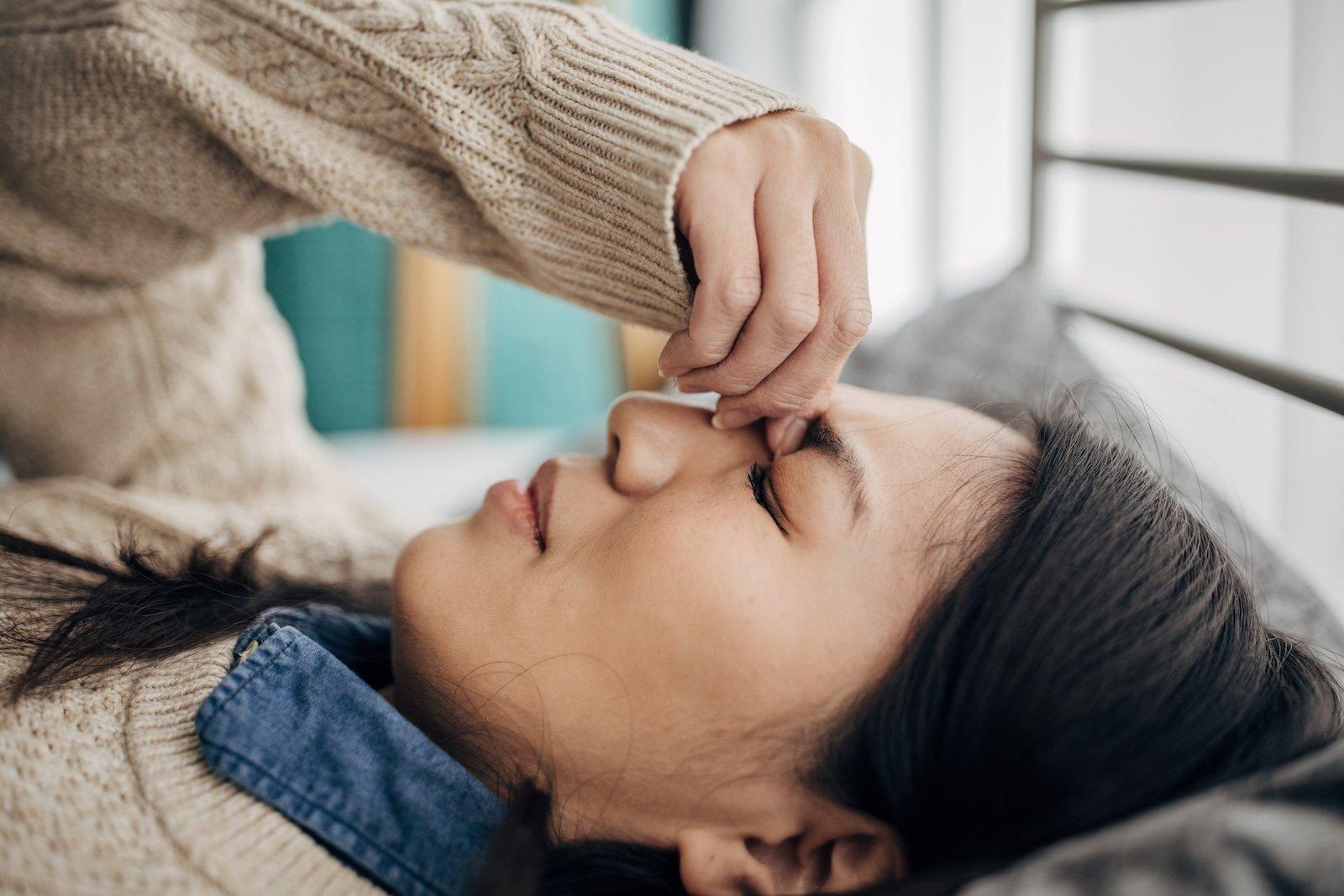
The main symptom of a migraine is usually a headache on one side, which can be intense. Some people can have pain on both sides of their head and it can also be felt in their face or neck. The pain mostly feels like throbbing and it can get worse with movement. This might stop you from doing your normal day-to-day activities.\
Other symptoms of a migraine can include:
- Nausea
- Vomiting
- Having a higher sensitivity to sound and light (some people with a migraine want to be in a quiet and dark room)
Some people may also experience:
- Sweating
- Struggling to concentrate
- Feeling very cold or very hot
- Having stomach pain
- Diarrhoea
- Feeling dizzy or lightheaded
Not everyone has all the symptoms of a migraine and some people may even experience the symptoms without having a headache. Symptoms of a migraine can last between four hours to three days, but any tiredness you have can last for up to a week afterwards. You might also get warning signs that you’re about to have a migraine. These are called auras.
Auras
Aura is a term used to describe the symptoms of a migraine that are linked to your brain and nervous system. The most common symptoms are to your sight like seeing flashing lights, blind spots or zigzag patterns, but they can include:
- Feeling numb and having pins and needles
- Feeling weak
- Difficulty speaking or having problems with your speech
- Feeling dizzy
- Having a loss of consciousness (this is unusual)
Aura symptoms usually progress over five minutes and they can last for up to one hour. Some people might have an aura before their headache, at the same time as their headache, with a mild headache or with no headache at all.
Types of migraines
Migraine with aura
About one in three people with migraine have a migraine with aura. The aura (warning sign) most commonly is a symptom that affects your sight, for example, you might have blind spots or see flashing lights. Auras usually happen before a headache, but sometimes they can happen on their own. They can last for up to an hour. You can learn more about auras in the “Recognising the symptoms of migraine” section of the page.
There are different types of migraine with aura which include:
- Migraine with brainstem aura
- Hemiplegic migraine
- Retinal migraine
Migraine without aura
Migraine without aura is the most common type of migraine. ‘Aura’ is a warning sign of a migraine. You can learn more about migraines in the “Recognising the symptoms of a migraine” section of the page.
If you have a migraine without aura, you won’t get this warning sign that a migraine attack is about to begin. Migraine without aura can last for up to three days without treatment or if the treatment isn’t effective. You might hear of a migraine without aura being called a ‘common migraine’ or ‘hemicrania simplex’ but these terms aren’t used as often anymore.
Common symptoms of a migraine without aura include:
- Having a headache that’s usually on one side of your head. This mostly feels like throbbing and can get worse when you move
- Feeling sick or being sick
- Being sensitive to light (photophobia), sound (phonophobia) and or smells
Treating a migraine without aura depends on how regular and severe your attacks are. Treatment also depends on factors like if you have any other illnesses or if you’re taking any other medicines. You can learn more about treatment for migraine in the ‘Treating migraines’ section of the page.
Migraine aura without headache (silent migraine)
Migraine aura without headache is also known as a silent migraine. This is where you have an aura or other migraine symptoms, but you don’t have a headache. Migraine aura without headache isn’t very common. Despite not having a headache, it can still be painful for those who live with it.
Retinal migraine
A retinal migraine is a type of migraine that affects the eyes. They can cause temporary vision loss in one eye and other symptoms linked to the eyes. They are less common than other types of migraine. You may hear of them being called visual or ocular migraine.
Symptoms of a retinal migraine usually affect one eye. They can include:
- Loss of vision – this usually lasts between 10 to 20 minutes but can last for up to an hour
- A blind spot in your vision
- A headache (this could be at the same time as your eye symptoms or shortly after)
- Other eye symptoms like blurred vision
- Feeling sick or being sick
You can sometimes get these eye symptoms without having a headache. It’s important to ask for an urgent GP appointment if you have problems with your vision, like a blind spot for the first time.
Make sure to speak to your GP if you have retinal migraines and:
- They’re getting worse
- You’re getting them more often than usual
- There’s been a change to any symptoms that you usually have
You need to call 999 if:
- You have a headache that’s come on suddenly and it’s extremely painful
- You’re having problems speaking and remembering things
- You have a sudden loss of vision, blurred vision or double vision
- You feel confused, dizzy or drowsy very suddenly
- You have a fit or a seizure
- You have a high temperature with a stiff neck, pain when you’re looking at bright lights, pale and blotchy skin or a rash that doesn’t fade when you roll a glass over it
- You have a sudden weakness in your arms or legs on one side of your body or one side of your face
These are signs of a serious condition that you’ll need immediate help for.
Treating migraines
There isn’t currently a cure for migraines but there are treatments that can help to reduce your symptoms. You might find that some simple steps can be enough to help manage your migraines like:
- Taking a nap in a dark, quiet room
- Taking over-the-counter pain relief medicines like paracetamol or a non-steroidal anti-inflammatory drug (NSAID) like ibuprofen if they’re suitable for you. Remember to take NSAIDs with a meal or a snack.
If you’d like more advice on pain relief medication, talk to your pharmacist. They can advise on medicines, including if there are any drug interactions, to help choose a pain relief option that’s suitable for you.
If an over-the-counter pain relief medicine isn’t helping to relieve your migraine symptoms, your GP may recommend taking a type of medicine called a triptan and possibly an anti-sickness medicine. Triptan medicines, including sumatriptan, are specific medicines for migraine symptoms. They're thought to work by reversing the changes in the brain that may cause a migraine.
You can also access prescription-only migraine treatments without the need to see your GP from Boots Online Doctor Migraine Treatment Service2. Anti-sickness medicines, known as anti-emetics, can treat migraines in some people even if you don’t actually feel sick or have been sick. These are prescribed by a GP and can often be taken alongside pain relief medication and triptans.
You might need to try a combination of medicines before you find something that works for you. If these medicines are unsuitable or don’t help with your migraine symptoms, you may want to consider acupuncture. Acupuncture is a technique where your body is pierced with a needle for therapeutic purposes. It’s safe when it’s delivered by trained practitioners.
There’s some evidence to show that acupuncture can help with migraine. For example, it can have an effect on your nervous system, spinal cord and brainstem. This may help to reduce pain transmission. Most GP surgeries don’t offer this, so you may have to pay for it privately.
If you have severe migraine symptoms, your migraines are getting worse or are lasting longer than usual, you should speak to your GP for advice. Keeping a diary is useful and can help to identify the type of headache you’re having. It’s important to get a diagnosis so you can get the right treatment and, if appropriate, make lifestyle changes.
You should also speak to a GP if:
- You have migraines more than once a week
- You’re finding it difficult to control your migraines
You need to ask for an urgent GP appointment or speak to NHS 111 if you have a migraine and:
- You’ve had it for more than 72 hours
- Your aura symptoms last longer than an hour at a time
- You’re pregnant or you’ve just had a baby
Make sure to call 999 if you or your child:
- Has a headache that comes on suddenly and is very painful
- Have problems with remembering things or speaking
- Lose your vision, have double vision or have vision that becomes blurry
- Feel confused or drowsy
- Have a seizure or have a fit
- Have a high temperature and any symptoms of meningitis
- Can’t move or have weakness in your arms, legs one side of your body or one side of your face
Developing a coping strategy
Dealing with migraines can be challenging, but developing coping strategies can help to improve how you manage them.
Identify your triggers
It can help to keep a migraine diary to keep track of when you have migraines and potential triggers like certain foods, stress or lack of sleep. Identifying patterns in your migraines can help you to avoid triggers where possible.
Lifestyle changes
The main theme for coping with migraines is consistency. Make sure that:
- You’re getting enough sleep
- You’re staying hydrated by drinking enough water
- Eating meals at regular times
- You’re exercising regularly but not overexerting yourself
Managing everyday stress
Dealing with the pain of migraines can be magnified if everyday stress is one of your triggers. Practicing relaxation techniques like deep breathing, meditation or yoga can help with dealing with everyday stress.
Creating a peaceful environment
When a migraine starts, find a quiet, dark and comfortable place to rest. You might need to use an eye mask, earplugs or soothing music to help you create a calming environment.